Commentary: The COVID-19 pandemic is trapping domestic violence victims in cages of terror
NEW YORK City: Terminal calendar week a friend called me in tears. That morning she had asked her husband about a household expense. He exploded in rage, hitting her repeatedly and smashing her into the wall.
"What should I practise?" she asked in a whisper, hiding in a room so he couldn't hear. Nervously, she explained that her husband had been ambitious before, and she wanted to leave with her kids.
But she fears it would exist impossible to flee during the COVID-19 lockdown — and thinks he will lose his (faltering) career in professional person services if she reports him to the law, leaving the family with trivial income.
"Corona has trapped us in hell," she declared, expressing despair that governments had imposed lockdowns without doing more to assist vulnerable families.
CAGES OF TERROR
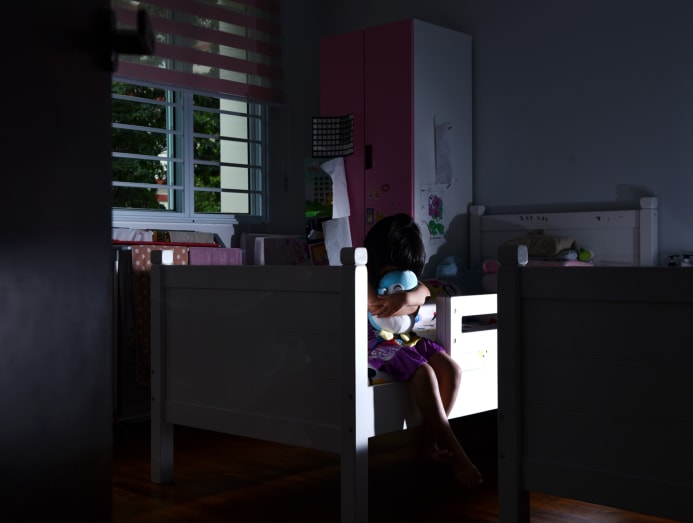
Every bit I listened, I was overwhelmed with grief, not just for this particular family only also for the countless other adults and children at present trapped in a muzzle of terror, stress and corruption.
Data from around the earth suggest that the introduction of lockdowns has led to a ascent in domestic abuse, with victims unable to avoid perpetrators.
READ: Commentary: She'south practically asking for it? Do Singaporeans subscribe to rape myths?
READ: Commentary: Don't forget the vulnerable in the fight against COVID-xix
In the United kingdom of great britain and northern ireland, as my colleague Sebastian Payne reported this week, the clemency Refuge says calls to its helpline take risen 49 per cent to about 400 a day.
Like patterns have been reported in Europe, the U.s. and many other countries, prompting UN Secretary-General António Guterres to urge "governments to put women's safety first as they respond to the pandemic".
Even in places where statistics seem to suggest that domestic violence cases are falling — in Los Angeles, for case, the police say reported cases were xviii per cent lower than a year ago between Mar 19 and Apr 15 — this is sparking concern, not relief.
Police fear that many victims — similar my friend — feel too scared to even file a report, or are unable to notice a prophylactic way to do so.
"Nosotros're having 10 fewer offense reports each day for instances of domestic violence," the Los Angeles police department chief Michel Moore told local television. "That'south going in the wrong direction with what we believe is actually happening behind closed doors."
Economic STRESS AND ISOLATION
For a minority of financially blessed and happy families, lockdown might seem well-nigh akin to a creative vacation.
For most, however, it has unleashed profound stress due to economic pressures, bereavement, sickness — and the unfamiliar experience of being cooped up in small spaces, in many cases juggling kids and, if you are lucky enough, jobs.
In homes that are already prone to abuse, a COVID-19 lockdown creates a living nightmare. That is partly because of the all-too-obvious reason that information technology is hard to run away.
READ: Commentary: Isolated with your abuser? Why family violence seems to be on the rise during COVID-19 outbreak
READ: Commentary: A deep pain but strong will to alive - lessons from a survivor of abuse
But information technology is besides due to a more subtle problem: The mental cage.
Abusers typically control their victims not just through physical violence but by making them think that abuse is justified, if non inevitable.
Sometimes they deliberately isolate victims from others, decision-making their communications; other times they apply emotional abuse to make the victim feel aback.
In an abusive situation, the abnormal gradually starts to seem normal as a wider perspective slides away, to a caste that detached outsiders can struggle to understand.
BREAKING Gratis
COVID-19 cruelly reinforces this. Today nothing seems entirely "normal". Social distancing is required. Many people feel emotionally tuckered.

For abuse victims, it thus seems doubly hard to flee; breaking free requires extraordinary amounts of emotional and physical energy — not to mention money.
Can victims be helped? Yes. They need more ways to access support (my friend says she tried to telephone call a government advice line for help, but was left on concur for so long she gave upwards).
There also need to be more routes for abuse victims to report problems without detection. One smart innovation in Kingdom of spain'southward Canary Islands, since copied in a number of countries, is for victims to use the code "Mask-19" at local pharmacies to discreetly indicate their plight.
Empty hotels could and should be used for shelters, without judgement or cost. Governments should give financial assistance to people seeking to escape.
READ: Commentary: A dwelling can heal in the fourth dimension of coronavirus
READ: Commentary: Lockdown and isolation sound simple – but keeping people at home is no easy respond
At that place is also a drastic need for subsidised therapy, not just at present but in the hereafter as well; the trauma of domestic violence can concluding years.
There is another step we should all take: Watching out for each other. Right now, my friend plans to stay in her business firm (reverse to advice) since she feels too short of money to leave, wants to avoid disrupting her kids and thinks she can mitigate her husband's rage. I hope so.
But she has promised to stay in close bear upon past text — and asked for her story to be told anonymously to "let people know what the lockdown has washed" to families similar hers, and to entreatment for more than authorities support.
"There is so much that is broken at present. Can it heal?" she said sadly in a recent call. It is a question that untold others might now exist request too.
BOOKMARK THIS: Our comprehensive coverage of the coronavirus outbreak and its developments
Download our app or subscribe to our Telegram channel for the latest updates on the coronavirus outbreak: https://cna.asia/telegram
Source: https://cnalifestyle.channelnewsasia.com/commentary/commentary-covid-19-pandemic-trapping-domestic-violence-victims-cages-terror-282666
0 Response to "Commentary: The COVID-19 pandemic is trapping domestic violence victims in cages of terror"
Enregistrer un commentaire